
The world’s coral reefs, often described as the “rainforests of the sea,” are facing an existential threat. These vibrant, bustling metropolises of the ocean, which cover less than 1% of the seafloor yet support an estimated 25% of all marine species, are succumbing to a cascade of human-induced pressures. Rising sea temperatures trigger catastrophic bleaching events, where corals expel the symbiotic algae that give them color and life. Ocean acidification, a direct result of absorbed atmospheric CO2, weakens their calcium carbonate skeletons, making them fragile and vulnerable. Add to this the relentless pressures of pollution, overfishing, and destructive coastal development, and the prognosis for these critical ecosystems appears grim. For decades, marine biologists and conservationists have fought a valiant but often uphill battle, employing traditional methods like coral gardening and installing simple concrete structures to foster regrowth. However, these approaches, while noble, have often struggled to keep pace with the scale of degradation.
But on the horizon, a revolutionary alliance is emerging, one that fuses the precision of digital design with the principles of marine biology. A new wave of innovators architects, engineers, and designers are stepping off the land and into the water, bringing with them a powerful tool: 3D printing. This is not merely a story of creating artificial substitutes; it is the story of how we are learning to speak the language of the ocean itself, designing with nature, not just for it. The most promising signal of this success comes from a stunning development: architect-designed, 3D-printed reef structures are not just being deployed; they are thriving, teeming with marine life in a way that was once thought impossible for human-made constructs.
Beyond Concrete Blocks: The Architectural Philosophy of Artificial Reefs
For years, the standard solution for creating artificial reefs involved sinking decommissioned ships, dumping military tanks, or deploying hastily designed concrete modules. While these structures often provided a hard substrate for marine life to colonize, they suffered from significant limitations. Their designs were largely generic, conceived without a deep understanding of the hydrodynamic forces, light patterns, and spatial complexities that coral larvae and other organisms require.
Architects entered this space with a fundamentally different perspective. Their training is rooted in creating spaces that are not just structurally sound, but also functional, sustainable, and responsive to their inhabitants’ needs. When applied to the ocean, this philosophy translates into a bio-inspired design approach. Architects ask critical questions that were previously overlooked:
A. What surface textures and micro-crevices do coral larvae and other settling organisms prefer?
B. How can we design a structure to dissipate wave energy, preventing erosion and protecting the coastline, while also creating calm niches for fragile life?
C. What internal geometries and caverns are necessary to provide shelter for fish, crustaceans, and other mobile species?
D. How does the orientation and geometry of a structure affect light penetration, a critical factor for photosynthetic corals and algae?
This shift from simply providing “stuff” on the seafloor to meticulously “designing a habitat” marks a quantum leap in restoration ecology. It is the difference between throwing bricks into a field and constructing a fully planned city with homes, parks, and infrastructure.
The Digital Foundry: How 3D Printing Brings Complex Reefs to Life
The visionary designs conceived by architects would remain mere digital dreams without a manufacturing process capable of realizing their complexity. This is where 3D printing, or additive manufacturing, becomes the indispensable enabler. Traditional molding or carving techniques are cost-prohibitive and incredibly limiting when dealing with the intricate, organic forms of a natural reef. 3D printing, however, builds objects layer by layer, directly from a digital file, allowing for the creation of shapes of virtually any complexity.
The process typically unfolds in several key stages:
A. Digital Scanning and Modeling: The process often begins with scanning existing, healthy coral colonies using underwater photogrammetry or 3D scanners. This captures the exact geometry of nature’s most successful designs. Architects then use this data to create and modify digital models, optimizing them for printability and ecological function. They can create porous, labyrinthine structures that mimic the complex habitat of Acropora or Porites corals.
B. Material Selection – The Clay of the New Reef: The choice of material is paramount. It must be durable enough to withstand decades of ocean currents and storms, chemically inert so as not to pollute the water, and, most importantly, attractive to marine life. The most common and promising materials include:
* Terracotta Clay: Used in several pioneering projects, terracotta is a natural, pH-neutral material that is safe for the marine environment. When printed and fired, it creates a rough, textured surface that is ideal for coral larval settlement.
* Specialized Concrete: Researchers have developed concrete mixes that are more environmentally friendly, sometimes incorporating recycled materials like coal ash or crushed glass. The composition can be tweaked to achieve specific surface textures and pH levels that encourage biological growth.
* Biocompatible Polymers: Experimental projects are exploring the use of sustainable plastics, including those made from corn starch or algae. These can be printed into incredibly fine details and are sometimes designed to slowly degrade as natural corals grow over them.
* Sand-based Geopolymers: Some innovators are using a binder to fuse local sand into a rock-like solid, essentially creating reefs from the very material found on the seafloor, minimizing transport emissions and ecological disruption.
C. Fabrication and Deployment: Large-scale 3D printers, often of the gantry or robotic arm type, fabricate the reef modules. These modules are designed to interlock like pieces of a giant, underwater puzzle. They are then transported by barge to the deployment site, where cranes carefully lower them into place on the barren seafloor. The placement is not random; it is strategically planned to create a cohesive, large-scale ecosystem.
Case Studies in Success: Where Digital Reefs are Blooming
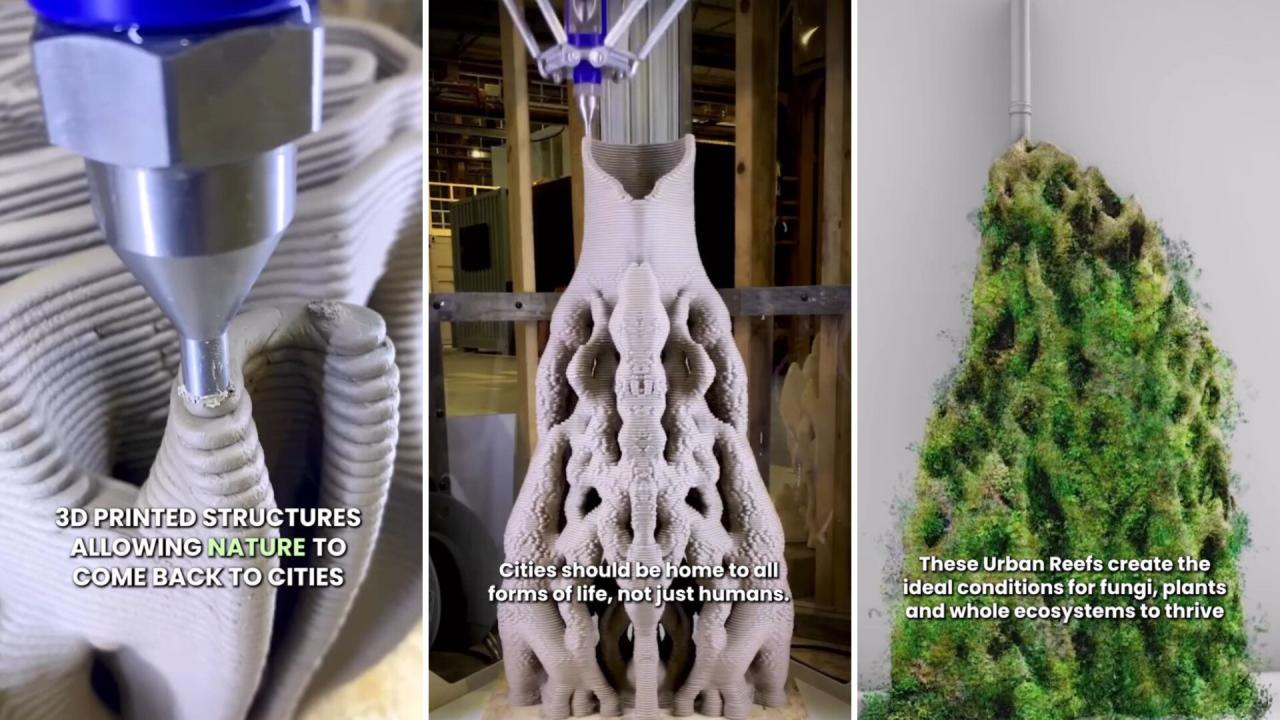
The theory and process are compelling, but the true measure of this technology’s impact lies in its real-world application. Across the globe, from the Caribbean to the Indian Ocean and the Mediterranean, these architect-designed reefs are passing the ultimate test: they are being adopted by marine life.
A. The MOUA (Museum of Underwater Art), Australia:
Off the coast of Townsville, Australia, lies a stunning fusion of art, science, and conservation. The Coral Greenhouse, designed by sculptor Jason deCaires Taylor, is perhaps the world’s most artistic artificial reef. While Taylor is a sculptor, his work is deeply architectural in its execution and intent. The structure is not only a functional habitat but also a powerful symbolic gesture. Printed in pH-neutral stainless steel and concrete, the greenhouse is already being colonized by corals, sponges, and a diverse array of fish. Its success demonstrates that functional restoration can also be a profound cultural and educational experience, raising public awareness through breathtaking beauty.
B. The Reef Design Lab, Maldives:
In the Maldives, a nation whose very existence is threatened by rising seas and reef degradation, the Reef Design Lab has pioneered the use of 3D-printed terracotta reefs. Their modular, intricate structures, resembling elaborate star-shaped units, were deployed to rehabilitate areas damaged by coral bleaching. The result? Within just two years, the terracotta modules exhibited coral survival rates exceeding those of traditional restoration methods. The complex geometry provided excellent protection for juvenile fish, and the porous material allowed for natural water flow, bringing nutrients to the settling polyps. This project is a critical proof-of-concept for using locally-sourced, natural materials in large-scale restoration.
C. The X-Reef Project, Monaco:
This project exemplifies the high-tech, architect-driven approach. Using advanced computational design, architects created a reef structure that was optimized for hydrodynamic stability and habitat complexity. Printed in concrete, the X-Reef was designed with specific cavities for lobsters, overhangs for shading corals, and a surface pattern engineered to maximize larval settlement. Monitoring has shown rapid colonization by a wide range of species, confirming that data-driven design can directly translate into ecological success.
The Multifaceted Benefits: More Than Just Coral Growth
The success of these projects is measured not just in coral cover, but in a cascade of positive ecological and societal outcomes.
A. Biodiversity Acceleration: The primary goal is to kickstart the ecosystem. The complex 3D-printed structures provide immediate habitat for fish, invertebrates, and crustaceans. This influx of life, in turn, creates a richer biological environment that makes it easier for coral larvae to settle and thrive, creating a virtuous cycle of recovery.
B. Coastal Protection: Healthy, three-dimensional reefs act as natural breakwaters, dissipating up to 97% of a wave’s energy before it hits the shore. By restoring the structural complexity of the seafloor, 3D-printed reefs help protect vulnerable coastlines from erosion and storm surges, a benefit that will become increasingly critical with climate change.
C. Economic Revitalization: Coral reefs are economic powerhouses, supporting fisheries and tourism industries worth billions of dollars globally. By restoring reefs, these projects help safeguard the livelihoods of local communities that depend on healthy marine ecosystems for food and income.
D. Scientific Research Platform: These designed reefs serve as living laboratories. Because their form is precisely known and controlled, scientists can conduct unprecedented research on coral recruitment, species interaction, and the long-term effects of design variations on ecosystem development.
Navigating the Challenges and The Future Horizon
Despite the exciting progress, the path forward is not without its obstacles. The current cost of large-scale 3D printing, while decreasing, remains high. Scaling up from a few hundred modules to the thousands needed to rehabilitate entire reef systems is a monumental logistical and financial challenge. There are also ongoing questions about the long-term durability of some materials and the need for continuous monitoring to assess true ecological integration.
However, the future horizon is bright with potential. The next generation of 3D-printed reefs is already being conceptualized:
A. Living Ink Printers: Imagine printers that operate directly on the seafloor, using a paste composed of a bio-cement and live coral micro-fragments. This “direct deposition” method could allow for the rapid, in-situ printing of complex reef forms that are alive from the moment of creation.
B. Smart Reefs with Integrated Sensors: Future reef modules could be printed with embedded sensors to monitor water temperature, acidity, salinity, and biological activity in real-time, providing a constant stream of data to scientists and managers.
C. Hybrid and Adaptive Designs: The ultimate goal is to create reefs that are not static, but can adapt. This could involve designs that encourage specific species known to be more resilient to warmer temperatures, or structures that can be easily added to or modified as conditions change.
Conclusion: A Blueprint for Hope in the Anthropocene
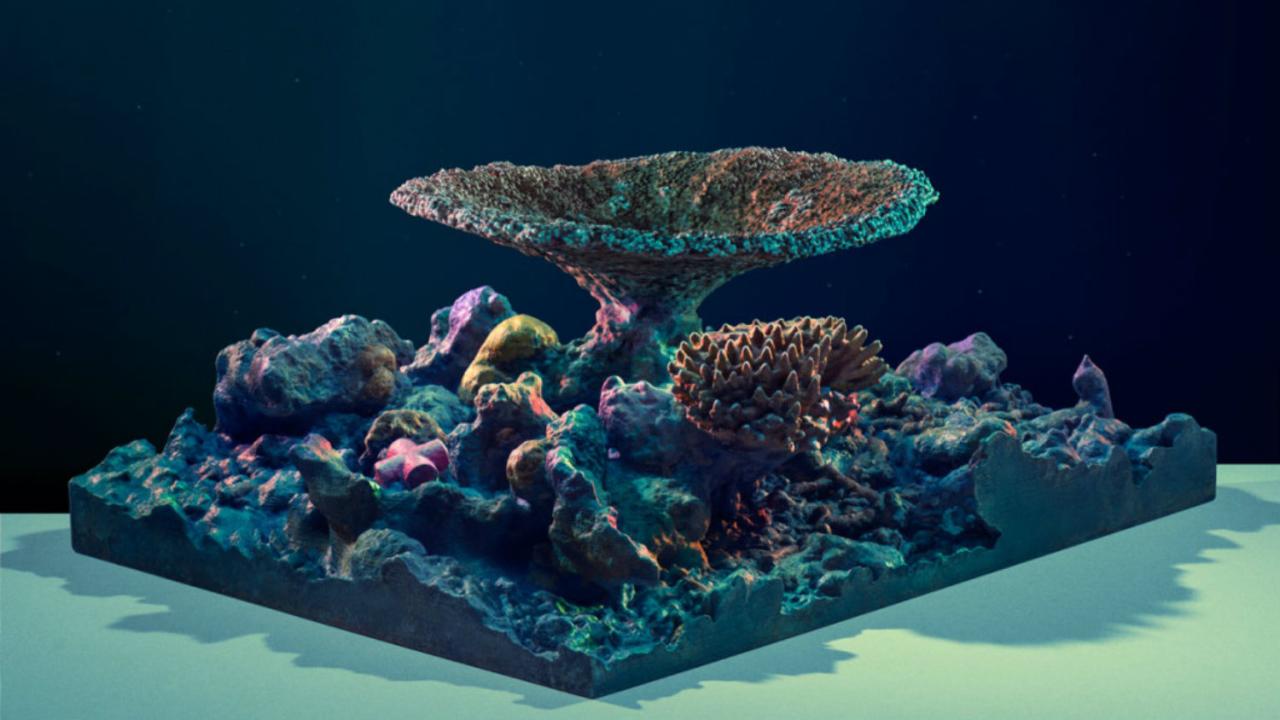
The story of architects and their 3D-printed coral reefs is far more than a technological novelty. It is a powerful testament to a new era of ecological restoration one defined by humility, collaboration, and deep intelligence. We are moving beyond simply trying to fix the damage we have caused; we are learning to co-create with nature, using our most advanced tools to build scaffolds for life to reclaim its throne.
These thriving, printed structures standing on the ocean floor are more than just habitat. They are symbols of resilience and ingenuity. They represent a future where human intervention is not synonymous with destruction, but can be a force for regeneration. They offer a tangible, hopeful blueprint a meticulously designed, layer-by-layer promise that even in the face of overwhelming crisis, we can still choose to build a future where the oceans once again teem with life, color, and wonder.