The image of the solitary architect, bent over a drafting table with a pencil in hand, is a romantic relic of the past. The modern architectural landscape is a dynamic, complex symphony of client demands, environmental regulations, engineering constraints, and artistic vision. Navigating this labyrinth requires not just skill, but powerful new partners. Enter Artificial Intelligence (AI), a force that is rapidly transitioning from a futuristic buzzword to an indispensable co-designer, fundamentally reshaping how our built environment is conceived, created, and experienced. This is not a story of machines replacing human creativity; it is the dawn of a powerful new alliance where human intuition and machine intelligence collaborate to unlock unprecedented possibilities.
The integration of AI into architecture marks a paradigm shift from a tool-based to a partner-based relationship. For decades, software like CAD and BIM have digitized the drafting and modeling process. However, they remained tools they executed commands but did not generate ideas. AI changes this dynamic entirely. By leveraging machine learning, generative design, and vast datasets, AI systems can now participate in the creative process itself, offering solutions, optimizing outcomes, and challenging assumptions. This collaboration is transforming every stage of the architectural workflow, from the first spark of an idea to the final brick laid.
A. Deconstructing the AI Toolkit for Modern Architects
To understand the revolution, one must first understand the tools. “AI in architecture” is not a single, monolithic entity but a suite of interconnected technologies, each serving a distinct and powerful purpose.
A. Generative Design: The Prolific Ideation Engine
This is perhaps the most transformative application. Architects no longer need to design a handful of options manually. Instead, they input a set of constraints and goals such as site dimensions, solar orientation, budget, number of rooms, desired materials, and aesthetic preferences. The AI then explores thousands, even millions, of possible design permutations in a fraction of the time. It can generate forms and layouts a human designer might never consider, pushing the boundaries of creativity and problem-solving. It’s a process of co-creation: the architect sets the vision, and the AI exhaustively explores the possible paths to achieve it.
B. Parametric and Algorithmic Design: The Logic of Form
While related to generative design, parametric design focuses on the relationship between elements. Architects define a set of parameters and the rules that govern them. When one parameter changes, the AI automatically adjusts all connected elements. For example, changing the curvature of a facade could automatically recalibrate the dimensions of every panel and its supporting structure. This allows for the creation of highly complex, organic forms that are both beautiful and structurally sound, ensuring that design intent is maintained flawlessly throughout the evolution of a project.
C. Building Performance Simulation and Optimization
Long before a foundation is dug, AI can predict a building’s future. Using predictive analytics, AI models can simulate a building’s energy consumption, thermal comfort, daylighting, acoustics, and structural loads under various conditions. It doesn’t just simulate; it recommends. The system can run countless iterations to find the optimal window placement for natural light, the best insulation material for energy efficiency, or the ideal structural system to withstand local seismic activity. This moves sustainable design from an aspiration to a data-driven science.
D. Computer Vision for Site and Existing Condition Analysis
AI-powered computer vision can analyze thousands of site photographs, satellite images, and drone footage to understand topography, vegetation, surrounding context, and even the cultural vernacular of a neighborhood. It can also be used in renovation projects to create accurate 3D models of existing structures through laser scanning, identifying cracks, deformations, and other critical details that might escape the human eye, thus informing a more respectful and integrated design.
E. Project Management and Construction Forecasting
AI’s role extends beyond the drawing board. It can analyze project schedules, weather data, supply chain logistics, and labor reports to predict potential delays and cost overruns. By identifying risks early, it allows project managers to proactively adjust plans, ensuring that projects stay on time and within budget, a perennial challenge in the construction industry.
B. The Collaborative Workflow: Human and Machine in Concert
The true power of AI is realized in a seamless collaborative workflow. Let’s walk through a hypothetical project to see this partnership in action.
Phase 1: Site Analysis and Conceptual Massing
An architect is tasked with designing a mixed-use building on a tight, irregular urban plot. Instead of spending days manually measuring shadows from adjacent buildings, she uses an AI tool with computer vision. The AI analyzes the site, maps the sun’s path throughout the year, identifies prevailing winds, and assesses the visual impact of neighboring structures. Simultaneously, the architect inputs the client’s program: 20,000 square feet of retail, 50 residential units, and a requirement for a public plaza.
The generative design AI then takes over. Within hours, it produces hundreds of massing studies. Some options prioritize solar gain for passive heating, others maximize views, and still others create the most efficient circulation flows. The architect is not overwhelmed but empowered. She can filter, compare, and hybridize these AI-generated options, using her professional judgment and aesthetic sense to select a handful of the most promising directions. The AI has done the heavy lifting of exploration, freeing the architect to focus on higher-level synthesis and decision-making.
Phase 2: Design Development and Optimization
With a chosen massing, the project moves into detailed design. The architect wants a unique, undulating facade. Using parametric design, she defines the relationship between the facade’s form and its performance. The AI system then helps her iterate: “If we deepen the curve here, how does it affect structural load and interior space?” The AI provides immediate feedback, allowing for real-time refinement.
Next, sustainability is integrated. The AI runs simulations, revealing that the initial facade design causes afternoon overheating in the western units. It doesn’t just flag the problem; it suggests solutions—perhaps automatically generating a series of brise-soleil (sun shades) that would mitigate the heat gain while enhancing the design’s visual identity. The architect evaluates these data-driven suggestions and incorporates them into the evolving design.
Phase 3: Construction Documentation and Fabrication
As the design is finalized, AI assists in the tedious task of documentation. It can help identify and resolve clashes between the architectural, structural, and MEP (Mechanical, Electrical, Plumbing) models before they become costly on-site errors. For components of the facade that are to be prefabricated, the AI can generate precise fabrication drawings and even instructions for robotic assembly, ensuring a level of accuracy and efficiency unattainable through manual methods.
C. Tangible Benefits: Why This Partnership is a Game-Changer
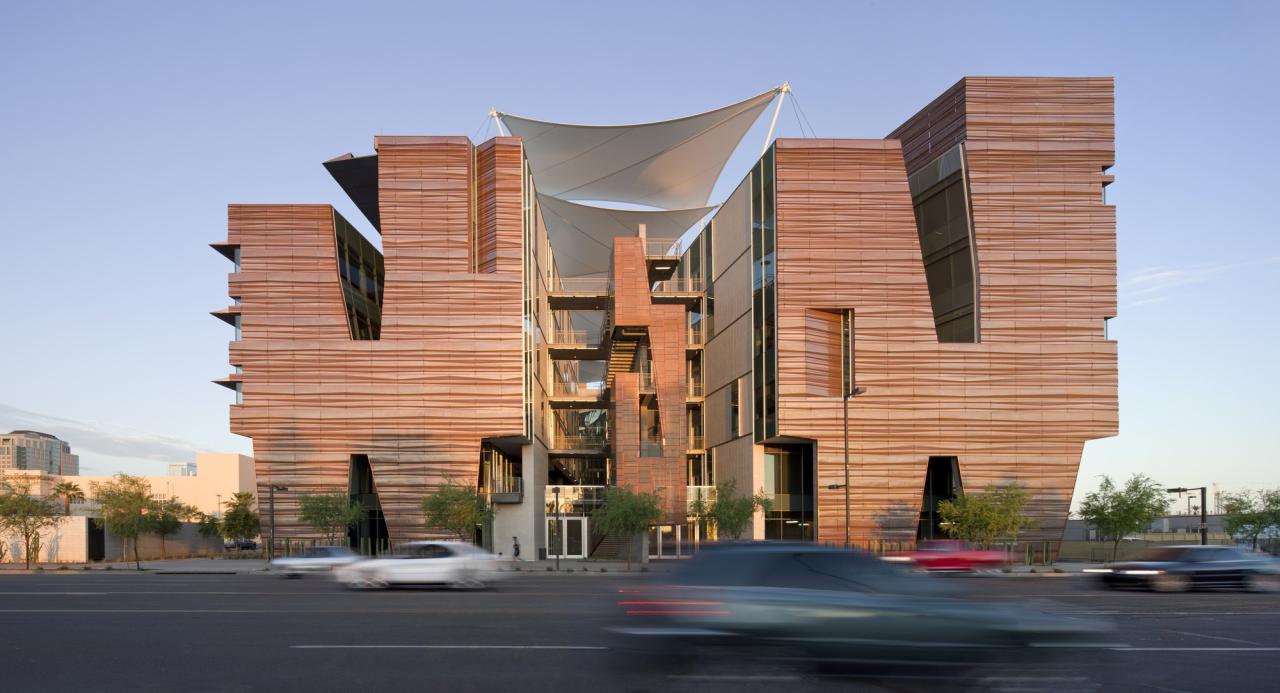
The collaborative model between architects and AI yields profound benefits across the board.
A. Unleashing Unprecedented Creativity and Innovation: By rapidly generating a vast array of non-obvious solutions, AI acts as a catalyst for creativity. It pushes architects beyond their stylistic habits and cognitive biases, leading to truly innovative forms, spaces, and structural solutions that are both aesthetically daring and functionally superior.
B. Radical Enhancement of Efficiency and Cost-Effectiveness: Automating time-consuming tasks like option generation, code compliance checking, and documentation shaves weeks or even months off project timelines. This efficiency translates directly into cost savings for both the architectural firm and the client. Furthermore, by optimizing building performance from the outset, AI ensures significant long-term savings in energy and maintenance costs.
C. Data-Driven, High-Performance Outcomes: AI moves sustainability from a qualitative goal to a quantitative, achievable target. Buildings are no longer just “designed to be green”; their environmental performance is simulated, verified, and optimized before a single drawing is finalized. This results in buildings that are healthier for occupants and kinder to the planet.
D. Mitigation of Risk and Error: The ability to simulate everything from structural integrity to pedestrian traffic flow allows architects to identify and solve problems in the virtual world. This proactive approach minimizes the risk of expensive change orders, construction delays, and post-occupancy failures, leading to more resilient and successful projects.
D. Navigating the Challenges and Ethical Considerations
Despite its immense potential, the integration of AI is not without its challenges and ethical dilemmas that the profession must thoughtfully address.
A. The Black Box Problem and Loss of Authorial Control: Some complex AI algorithms can be “black boxes,” meaning it’s not always clear how they arrived at a specific solution. Architects must remain the masters of their designs, using AI as a guide, not an oracle. The “why” behind a design decision must always be rooted in human reasoning and ethical consideration.
B. Data Bias and Perpetuating Past Mistakes: AI models are trained on existing data. If this data is biased for instance, favoring Western architectural styles or inefficient building types the AI may simply replicate and amplify these biases. The industry must be vigilant in using diverse, high-quality datasets to ensure AI promotes inclusive and contextually appropriate design.
C. The Skills Gap and the Evolving Role of the Architect: The architect of the future will need to be both a designer and a “conductor” of AI systems. This requires new skills in data literacy, programming, and human-machine interaction. Firms and academic institutions must invest in upskilling to prepare the next generation for this collaborative reality.
D. Intellectual Property and Authorship: When a building design is the product of a collaboration between a human and an AI, who owns the copyright? This is a nascent and complex legal area that will require new frameworks and definitions to determine authorship and liability.
E. The Human Touch and Cultural Sensitivity: Architecture is more than just optimized shelter; it is about emotion, experience, and cultural meaning. An AI can analyze data, but it cannot understand the soul of a place, the emotional weight of a space, or the nuanced cultural practices of its inhabitants. The architect’s role as an empathetic, culturally-aware storyteller is more critical than ever.
E. The Future Horizon: What’s Next for AI in Architecture?
The current applications are just the beginning. The future promises even deeper integration.
-
AI-Powered Urban Planning: Imagine AI simulating the entire lifecycle of a city block predicting traffic patterns, economic vitality, and social interactions over decades to inform master planning.
-
Generative AI for Interior Design: Tools that can generate fully-furnished, stylistically coherent interior renderings from simple text prompts (“a minimalist living room with Scandinavian influences and plenty of natural light”).
-
Construction Site Robotics: AI will not just design buildings but also help build them. Autonomous robots, guided by AI and BIM models, could perform tasks like bricklaying, welding, and painting with superhuman precision and speed.
-
Cognitive Buildings: Buildings will become living entities, with AI systems managing energy flow, space utilization, and maintenance in real-time, constantly learning and adapting to the needs of their occupants.
Conclusion: A Symbiotic Future, Forged in Code and Creativity
The narrative of AI as a job-stealing threat to architects is a profound misconception. The reality is far more exciting. AI is emerging as the most powerful collaborator an architect has ever had a partner that handles computational tedium, generates a universe of possibilities, and provides deep analytical insight. This partnership liberates the architect to focus on what they do best: synthesizing information, exercising aesthetic judgment, understanding human emotion, and crafting spaces that tell a story. The future of architecture is not a choice between human and machine; it is a powerful synergy of both. It is a future where the timeless value of human creativity is amplified by the boundless potential of artificial intelligence, leading to the creation of built environments that are more beautiful, more sustainable, and more humane than ever before.