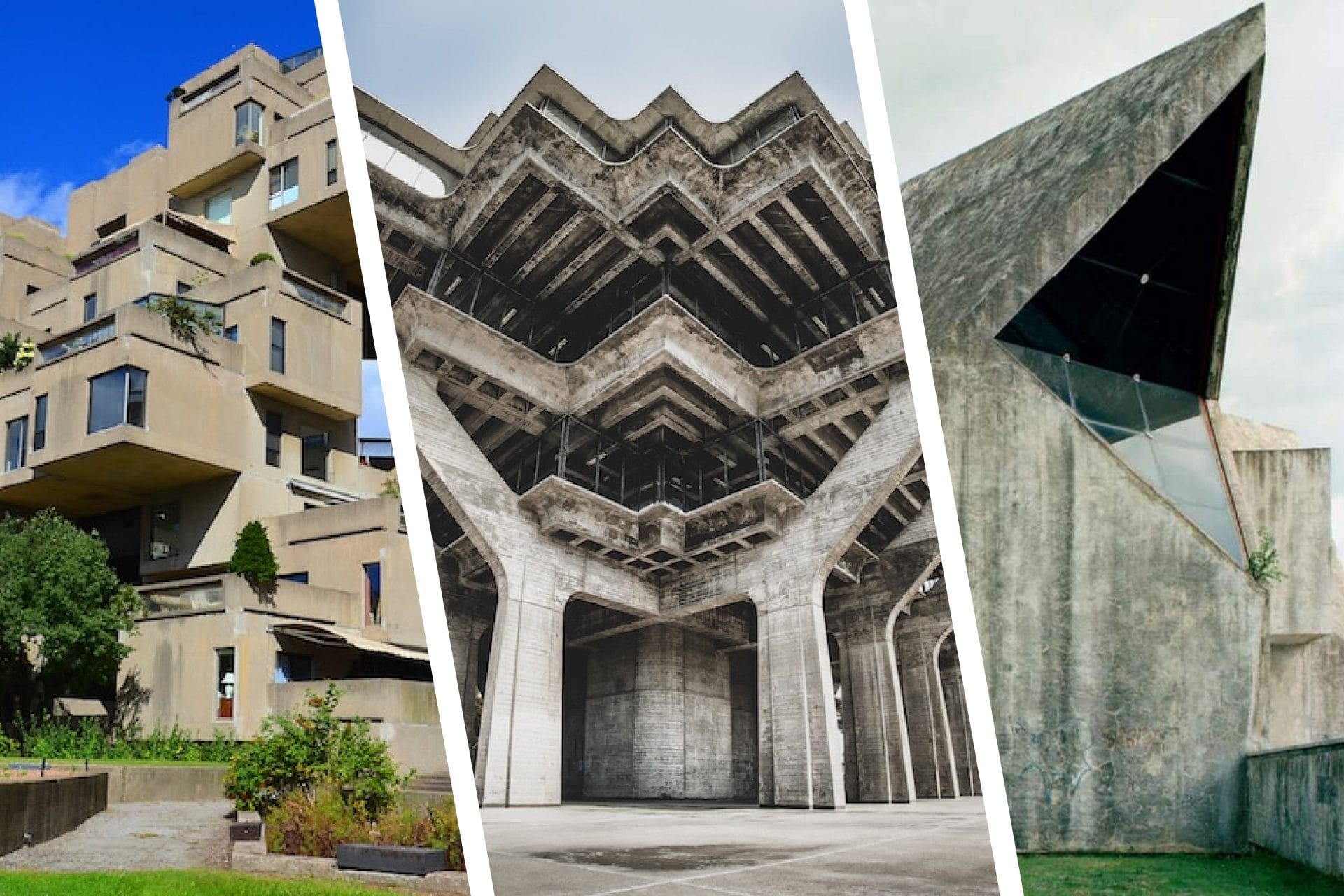
For decades, they stood as grey, monolithic reminders of a post-war era many wished to forget. Their hulking, concrete forms were labeled “cold,” “soulless,” and even “monstrous.” But today, these architectural behemoths are experiencing an unprecedented renaissance, not in the pages of academic journals, but on the vibrant, fast-paced stages of social media platforms like TikTok and Instagram. Brutalist architecture, once the epitome of urban decay, has become the latest obsession for a generation known for its appreciation of authenticity, raw aesthetics, and the beautifully imperfect.
The Brutalist Definition: More Than Just Concrete
Before delving into the reasons behind this viral phenomenon, it is crucial to understand the core principles of Brutalism. The term itself is a source of common misconception; it does not refer to the “brutal” or aggressive nature of the buildings, but rather originates from the French term béton brut, meaning “raw concrete”. This architectural style emerged during the 1950s in the United Kingdom, primarily as a response to the urgent need for low-cost, functional housing and civic buildings following the devastation of World War II.
The British architects Alison and Peter Smithson are widely credited with coining the term “New Brutalism” to describe their pioneering approach to design, which emphasized an honest expression of materials and structure over decorative embellishment. This philosophy was further popularized by the influential architectural critic Reyner Banham, who codified the movement’s ideals.
Brutalism is characterized by several distinct features:
A. Minimalist Constructions: The style strips away all unnecessary ornamentation, focusing purely on function and the fundamental elements of the building.
B. Raw Materiality: It predominantly features exposed, unpainted concrete or brick, showcasing the materials’ “as found” textures and the marks left by the casting process (like the board marks from wooden forms).
C. Geometric Shapes: Bold, angular, and repetitive geometric forms define the skyline, creating a powerful sense of mass and scale.
D. Monochrome Palette: The aesthetic is typically defined by a stark, grey, and often monochrome color scheme, though the interplay of light and shadow adds dramatic effect.
E. Utilitarian Aesthetic: The design often prioritizes the building’s utility, with structural elements like service pipes and water tanks displayed prominently rather than hidden away, as seen in the early Hunstanton School.
F. Monumental Sculptural Quality: Despite its functionalist origins, many Brutalist buildings possess a powerful, sculptural quality that makes them feel imposing, monolithic, and almost otherworldly.
This style was deeply influenced by the work of the Swiss-French architect Le Corbusier, particularly his use of raw concrete in projects like the Unité d’Habitation in Marseille, which is often cited as a foundational work of the movement. While rooted in a socialist, utopian ideology that sought to create affordable, functional spaces for the masses, the architecture of this era soon became a global phenomenon, spreading across Europe, the Americas, Asia, and the former Eastern Bloc.

From Urban Blight to Digital Darling
The journey of Brutalist architecture from critical derision to digital darling is a fascinating story of shifting cultural values. Historically, these buildings have been polarizing. Critics, including notable figures like Charles, Prince of Wales, have famously derided them as “piles of concrete,” associating them with urban decay, totalitarianism, and social failure. In damp climates, the concrete facades often became streaked with water stains and moss, reinforcing the image of neglect and harshness.
However, the very qualities that made Brutalism a target for critics are now driving its newfound popularity among younger generations. In a digital world saturated with perfectly curated, polished images of idyllic beaches and airbrushed lifestyles, raw, “unfiltered” concrete offers a powerful and refreshing aesthetic counterpoint. The “imperfect” and “authentic” nature of Brutalism resonates with a generation seeking genuine experiences and visual aesthetics that stand out from the crowd.
Social media, particularly TikTok, has played a pivotal role in this re-evaluation. Creators have begun using the hashtags #brutalism, #brutalistarchitecture, and #concreteaesthetic to share stunning visuals of these structures, often paired with moody, darkwave soundtracks that amplify their dramatic and cinematic qualities. The vertical, futuristic forms of some Brutalist buildings, like Skopje’s Central Post Office, have been likened to sci-fi landscapes like a “Millennium Falcon” or a “concrete cyber city,” adding a layer of retro-futuristic appeal.
How TikTok Revitalized the Brutalist Aesthetic
The visual and immersive nature of social media platforms like TikTok is tailor-made for Brutalist architecture. Short-form videos allow creators to showcase the buildings’ scale, texture, and the dramatic play of light and shadow in ways that static images cannot. The immersive nature of video creates a visceral experience, making viewers feel the weight and imposing presence of the concrete giants.
This trend is not just about looking at pictures online; it’s inspiring real-world action. Cities rich in Brutalist heritage are seeing a surge in interest from “architourists” – travelers seeking out these concrete monuments as their primary vacation destinations. Tours dedicated to Brutalism are being launched to meet this demand.
For instance, in Skopje, the capital of North Macedonia, local guide Aleksandra Georgieva recently started a walking tour dedicated to Brutalist architecture, stating, “It may not be everyone’s favorite, but it is very authentic and it is what sets Skopje apart from other cities”. The city, rebuilt after a devastating earthquake in 1963, is a treasure trove of Brutalist gems designed by international architects, including the master plan by Kenzo Tange and the Central Post Office by Janko Konstantinov.
Beyond Skopje, other global hotspots for Brutalist tourism include:
A. London, UK: Home to the iconic Barbican Centre, a sprawling cultural complex that is one of the most famous and celebrated examples of the style.
B. Yerevan, Armenia: Known for its Soviet-era architecture, including the Cascade Complex, a giant stepped stairway made of limestone.
C. Belgrade, Serbia: Another former Yugoslav city with a rich collection of Brutalist and modernist structures.
D. Paris, France: Home to Le Corbusier’s proto-Brutalist works and other notable examples of the movement.
The trend has even permeated the commercial sector. New businesses are adopting the aesthetic, such as the recent opening of Hyderabad’s first “brutalist cafe,” Cemnt Cafe, which uses exposed concrete and raw design to create a unique atmosphere.
The Evolution of the Aesthetic
While traditional Brutalism is often seen as imposing and unyielding, contemporary interpretations are blending its core principles with a softer, more refined touch. The Cemnt Cafe in Hyderabad is a perfect example of this “modern” Brutalism. It celebrates the exposed concrete walls and honest materials, but counterbalances the heavy, industrial feel with warm, natural light, vibrant accents (like cobalt blue and burnt orange), and comfortable furnishings.
This shows that the aesthetic is adaptable and can be applied in various contexts from monumental public buildings to private homes and trendy cafes to create spaces that feel both raw and sophisticated. This evolution proves that the core values of Brutalism honesty, materiality, and functional design remain relevant in the 21st century.
The Return of the Concrete Giant
The resurgence of Brutalist architecture on social media is more than just a fleeting trend. It represents a significant cultural shift in how we perceive and value design. It highlights a desire for authenticity and a break from the hyper-polished perfection of digital life. It demonstrates a renewed appreciation for the bold, the monumental, and the uncompromising. As tourists flock to concrete capitals and these buildings gain new appreciation online, Brutalism is being permanently reshaped from a symbol of a failed past into an icon of a gritty, authentic, and undeniably photogenic future.