
Imagine a city that breathes, adapts, and evolves in real-time. A place where the morning commute is optimized by dynamic traffic flows projected onto the streets, where a public park can transform into an open-air concert hall with immersive acoustics by night, and where new building designs are stress-tested against virtual hurricanes before a single brick is laid. This is not a scene from a distant sci-fi future; it is the emerging reality crafted by a new breed of visionaries: Holographic Architects.
These professionals stand at the confluence of urban planning, augmented reality (AR), virtual reality (VR), and data science. They are the digital-age master builders, wielding light and data instead of steel and concrete. Their canvas is the city itself, and their tools are powerful holographic interfaces that allow them to redesign, simulate, and interact with urban environments on a daily, even hourly, basis. This paradigm shift is moving us away from the static, decades-long urban projects of the past towards a dynamic, responsive, and deeply personalized urban experience. The city is no longer just a place we live in; it is a living, digital-physical hybrid that we can continuously improve.
A. The Core Toolkit of a Holographic Architect
To understand their impact, one must first understand the sophisticated suite of technologies that empowers them. This is not merely about creating 3D models on a computer screen; it’s about overlaying digital intelligence onto the physical world.
A. Advanced Holographic Displays and Interfaces: Gone are the two-dimensional monitors. Holographic architects work in immersive 3D spaces using heads-up displays (HUDs), holographic tables, and AR glasses. These interfaces allow them to “walk through” a photorealistic, scaled model of a city district, manipulating elements with gestures and voice commands. This spatial computing environment provides an intuitive understanding of scale, proportion, and sightlines that flat screens cannot match.
B. Real-Time Data Integration Platforms: The holographic model is not a static sculpture. It is a dynamic digital twin of the city, fed by a constant stream of real-time data. This includes IoT sensors monitoring traffic density, air quality, energy consumption, and noise levels; satellite imagery; social media sentiment analysis; and public transit GPS data. This live data pulse allows the architect to see the city not as it was designed, but as it is actually behaving at any given moment.
C. Powerful Simulation and AI Engines: This is the brain of the operation. Artificial Intelligence and Machine Learning algorithms process the immense data streams to run complex simulations. They can predict traffic patterns for a new road layout, simulate pedestrian flow for a proposed public square, calculate the structural integrity of a design under extreme weather, and even model the social and economic impact of a new policy. The AI can also generate multiple design alternatives based on set parameters, accelerating the ideation process.
D. Digital Twin Technology: A digital twin is a virtual replica of a physical asset, process, or system. For a holographic architect, the entire city has a digital twin. This twin serves as a sandbox for all experiments. Any proposed change from altering a bus route to constructing a skyscraper is first implemented and tested in the digital twin, allowing planners to foresee and mitigate unintended consequences before they manifest in the real world.
B. The Daily Workflow: A Symphony of Data and Design
The “daily redesign” is not about whimsically changing a city’s skyline on a whim. It is a meticulous, data-driven process of continuous optimization and long-term planning happening concurrently.
A. Morning Diagnostic and Data Assimilation: The day begins with a diagnostic of the city’s digital twin. The architect reviews overnight data reports energy grid performance, traffic incident logs, public space utilization metrics to identify pain points and inefficiencies. Anomalies are flagged by AI, directing the architect’s attention to critical areas needing intervention.
B. Collaborative Design Sprints in Holographic Space: Teams of architects, engineers, city officials, and even community stakeholders gather in a shared holographic environment. Here, they can collaboratively interact with a proposed design. A civil engineer can point to a virtual beam and see its load capacity, while an environmental scientist can visualize the wind patterns around it. This breaks down silos and fosters a truly integrated design process.
C. Public Engagement and Participatory Planning: One of the most transformative aspects is democratizing urban design. Using accessible AR apps on their smartphones, citizens can see proposed changes overlaid onto their real-world environment. They can take a virtual walk through a planned park and provide feedback directly through the app. This moves public consultation from abstract blueprints in a town hall to an immersive, accessible experience, leading to designs that truly reflect the community’s needs.
D. Iterative Simulation and Stress Testing: Throughout the day, proposed designs undergo relentless simulation. The AI tests them against thousands of scenarios: peak hour traffic, emergency evacuation events, seasonal weather changes, and even potential security threats. Each iteration refines the design, making it more resilient, efficient, and safe.
E. Implementation and Phased Rollout: Once a design is validated in the digital twin, its implementation can be orchestrated. For digital changes, like updating AR navigation cues for autonomous vehicles, this can happen instantaneously. For physical changes, the holographic plans guide construction crews with millimeter precision, often through AR headsets, ensuring that the built reality perfectly matches the digital vision.
C. Tangible Impacts: Revolutionizing the Urban Experience
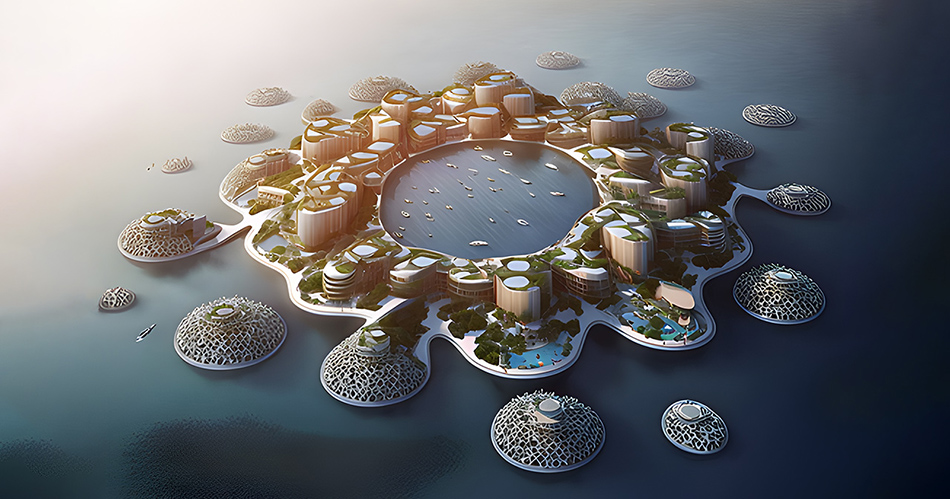
The work of holographic architects is already yielding profound benefits in pioneering smart cities across the globe.
A. Dynamic Traffic Management and Mobility: Static traffic lights are becoming a relic of the past. Holographic systems analyze real-time traffic flow and dynamically adjust signal timings, create virtual bus lanes during rush hour, and project navigation aids onto the road surface to guide drivers around congestion or accidents. This reduces commute times, lowers emissions, and enhances safety.
B. Resilient and Adaptive Public Spaces: A single public square can now serve multiple purposes seamlessly. In the morning, it can be configured with virtual guides for a quiet farmer’s market. In the afternoon, holographic play structures can appear for children. In the evening, the space can be transformed with immersive lighting and sound for a concert, all managed through the holographic interface without permanent physical alterations.
C. Hyper-Efficient Energy and Utility Grids: The digital twin models energy consumption across the city in real-time. Holographic architects can identify energy leaks, optimize the flow from renewable sources, and even simulate the impact of shading from new buildings on solar panel efficiency. This allows for a level of grid management that drastically reduces waste and carbon footprint.
D. Revolutionizing Construction and Maintenance: Before construction begins, every step is rehearsed in the holographic space, identifying potential clashes and safety hazards. During maintenance, a technician wearing AR glasses can see the internal layout of a wall, the location of faulty wiring, and step-by-step repair instructions overlaid onto the physical equipment, slashing repair times and improving accuracy.
E. Enhanced Public Safety and Emergency Response: In an emergency, the digital twin becomes a crisis management command center. Fire chiefs can see the predicted spread of a fire through a building and the location of trapped occupants. Evacuation routes can be dynamically projected onto streets, guiding people to safety. This provides responders with god-like situational awareness, saving lives and property.
D. Navigating the Ethical and Practical Minefield
This powerful technology does not come without significant challenges and ethical dilemmas that society must confront.
A. The Digital Divide and Accessibility: If crucial city services and information are delivered through holographic and AR interfaces, what happens to those who cannot afford or do not know how to use the required technology? There is a real risk of creating a two-tiered society: the “digitally augmented” and the “physically bound.” Ensuring equitable access is paramount.
B. Data Privacy and Surveillance Capitalism: A city that sees and senses everything is, by definition, a surveillance apparatus. The data collected on citizen movement, behavior, and preferences is incredibly valuable and vulnerable. Robust legal frameworks are needed to prevent this data from being misused by corporations or authoritarian governments for social scoring, predatory advertising, or control.
C. Architectural Homogenization and Algorithmic Bias: If AI is constantly optimizing for efficiency and flow, could it lead to sterile, homogenized cities that lack the quirky, unplanned charm of older urban centers? Furthermore, if the AI’s training data contains societal biases, it could perpetuate them in its designs, for instance, by systematically underserving certain neighborhoods.
D. The Skill Shift and Professional Disruption: The role of the traditional architect and urban planner is evolving. There is a growing need for hybrid skills data analysis, software engineering, and systems thinking—alongside classic design sensibilities. Educational institutions and professionals must adapt to this new reality.
E. Physical and Psychological Disconnect: An over-reliance on digital overlays could lead to a devaluation of the physical world. If we can make an ugly building look beautiful through an AR filter, what incentive is there to build beautifully? There is a risk of creating a “schizophrenic” environment where the digital and physical realities are starkly different, potentially causing cognitive dissonance.
E. The Future Horizon: Where Do We Go From Here?

The field of holographic architecture is still in its infancy, but its trajectory points toward even more profound integrations.
A. The Rise of the Cognitive City: The next step is a city that not only reacts but anticipates. With advanced AI, the urban digital twin will become a predictive cognitive system. It will foresee traffic jams before they form, suggest optimal energy usage to homeowners, and pre-emptively allocate resources to where they are needed, creating a truly proactive living environment.
B. Neural Interfaces and Direct Sensory Design: The future may move beyond glasses and screens. Direct brain-computer interfaces (BCIs) could allow architects to design and experience spaces through thought and pure sensation, and for citizens to perceive holographic elements as seamlessly as physical ones, blurring the line between reality and simulation entirely.
C. Self-Healing Urban Infrastructure: Integrated with robotics and 3D printing, the holographic system will not just diagnose problems but also fix them. It could dispatch drones to repair a streetlight, direct autonomous robots to fix a pothole, or coordinate 3D printers to rebuild a damaged structure, creating a city that can maintain and repair itself.
D. Personalized Environmental Bubbles: Ultimately, the city experience could become highly personalized. Your AR interface could filter out visual clutter, highlight your favorite historical facts as you walk past a monument, or even create a personalized soundscape, effectively allowing everyone to live in their own slightly customized version of the city.
In conclusion, the holographic architect is far more than a futuristic designer; they are the essential steward for our increasingly complex urban worlds. They represent a fundamental shift from building cities as permanent, monolithic structures to cultivating them as adaptive, responsive ecosystems. While the challenges of privacy, equity, and ethics are formidable, the potential to create cities that are safer, more efficient, sustainable, and deeply human-centric is unparalleled. The daily redesign is not an act of caprice, but a commitment to perpetual improvement, ensuring that our cities can learn, grow, and evolve right alongside us.